
The alarm pierced the quiet of the night at 1 a.m. on May 1st, and with a rush of excitement, we stirred awake. Austin, brimming with anticipation for his very first journey to the Northeast, was already buzzing with energy. Within half an hour, the three of us were dressed, bags packed, and sliding into the cab that whisked us through the sleeping city toward the airport. By 2:30 we had arrived, with time to spare, and curiosity led us to explore DigiYatra. The check-in and security process unfolded seamlessly, leaving us free to wander into the waiting lounge, where we settled in, eager for the rest of our companions to arrive.
Eight of us from the Bangalore Butterfly Club were bound for Rimbi, Sikkim, united by our shared passion to discover and document the butterflies of that enchanting region. The names on our roster carried a sense of camaraderie and adventure: Ashok Sen Gupta, Rohit Girotra, Dr. Rajesh Gopiath, Shekhar R, Shekhar N, Ajit Varghese, Austin Ajit, and myself, Shiny Ajit. As we waited, the first boarding call echoed through the lounge, yet our friends were still caught in the long, winding queue. Relief washed over us when, at last, all eight emerged, breathless but triumphant, just in time to join the journey.
Soon we were airborne, the hum of the engines blending with our laughter and anticipation. As the plane pierced through the clouds, the thought of Sikkim’s misty valleys and fluttering wings filled our minds. Between the clouds, with hearts light and spirits soaring, our adventure had truly begun.
From Clouds to Kanchenjunga: A Journey to Rimbi
Austin, as always, claimed the window seat—his eyes alive with curiosity, his hands busy filming the shifting shapes of clouds. Each puff of white became a canvas for imagination, and under the spell of Enid Blyton’s Faraway Tree, we saw kingdoms and lands hidden in its folds. I, seated away from the window, could only catch glimpses, but perhaps that made me savor them more. Breakfast arrived, and our journey continued with laughter and stories, while Austin, ever restless, leaned forward to capture a fleeting glimpse of Mount Kanchenjunga—the world’s third-highest peak—its snowy crown shimmering above the Himalayan range. He proudly declared he had secured an “ID shot.”
We landed safely at Bagdogra Airport, where two lapwings seemed to welcome us with their sharp calls. After gathering our luggage and exchanging pleasantries, questions filled my mind—how would we reach Rimbi, who would guide us? Ashok da’s phone call answered them: Pemba Sherpa, our captain for the road ahead, appeared with a smile. Soon, our luggage was strapped atop a sturdy Bolero, evoking scenes from old Hindi films.
Inside the vehicle, we settled into our places—Ashok da, Rajesh, and Rohit Sir at the back, Shekhar N, Ajit, and I in the middle, while Austin and Shekhar R shared the front seat. The first stretch offered little charm: dusty roads, honking traffic, and a restless wait for change. Then, a signboard appeared—Mahananda Wildlife Sanctuary—and with it, a breath of greenery. On one side, a river flowed sluggishly, its dull waters stirring sadness in us, as if nature itself whispered of neglect.
Yet, the promise of mountains and forests ahead kept our spirits alive. The journey had only just begun, and every bend seemed to hint at stories waiting to unfold.
Along the Teesta: Hunger, Momos, and Mountain Roads
By the time the Bolero rattled past another bend, hunger had become our constant companion. Every five minutes, someone would ask Pemba, our ever-patient captain, “How far to the hotel?” At last, relief arrived in the form of Chaasum Restaurant, a modest stop tucked along the road. We ordered eagerly, but the wait stretched long, and when the dishes finally appeared, only half of what we had asked for made it to the table. Yet, the steaming plates of momos united us—soft dumplings that seemed to melt into laughter. Rajesh, Ajit, Austin, and I added coffee to the mix, and the first sip was nothing short of mind-blowing, rich and aromatic, warming us from within. The rest of the orders were forgotten; with momos and coffee, our spirits were restored.
Back on the road, the Teesta River accompanied us like a silent guardian. She flowed calm and assured, no longer the playful stream of youth but a mature river, carrying centuries of stories in her currents. On one side rose the mountains, their slopes draped in shades of green and mist, while on the other, the Teesta glided gracefully, her silver surface catching the light. The road between them was narrow, twisting and turning like a ribbon laid across the land.
Each curve revealed a new spectacle: cliffs plunging into the river, terraces of villages clinging to hillsides, and sudden bursts of wildflowers along the edges. The air grew cooler, fresher, and every breath felt like a gift. The scenery was breathtaking—mountains and river locked in eternal embrace, while we, mere travelers, wound our way through their timeless dance.
The hunger was gone, replaced by awe. With every turn, the journey deepened into something more than travel—it became a communion with nature, a reminder of how small we are before rivers and peaks, yet how lucky to witness their grandeur.
The complete journey Ashok da , Rohit Sir, and Rajeesh were in deep discussion about Hindi movies and songs, and that made me think about my childhood and watching the first cinema Amar Akbar Anthony with my dad, who is a huge fan of Mohamed Rafi and Lata Mangeshkar. He introduced me to the world of songs.
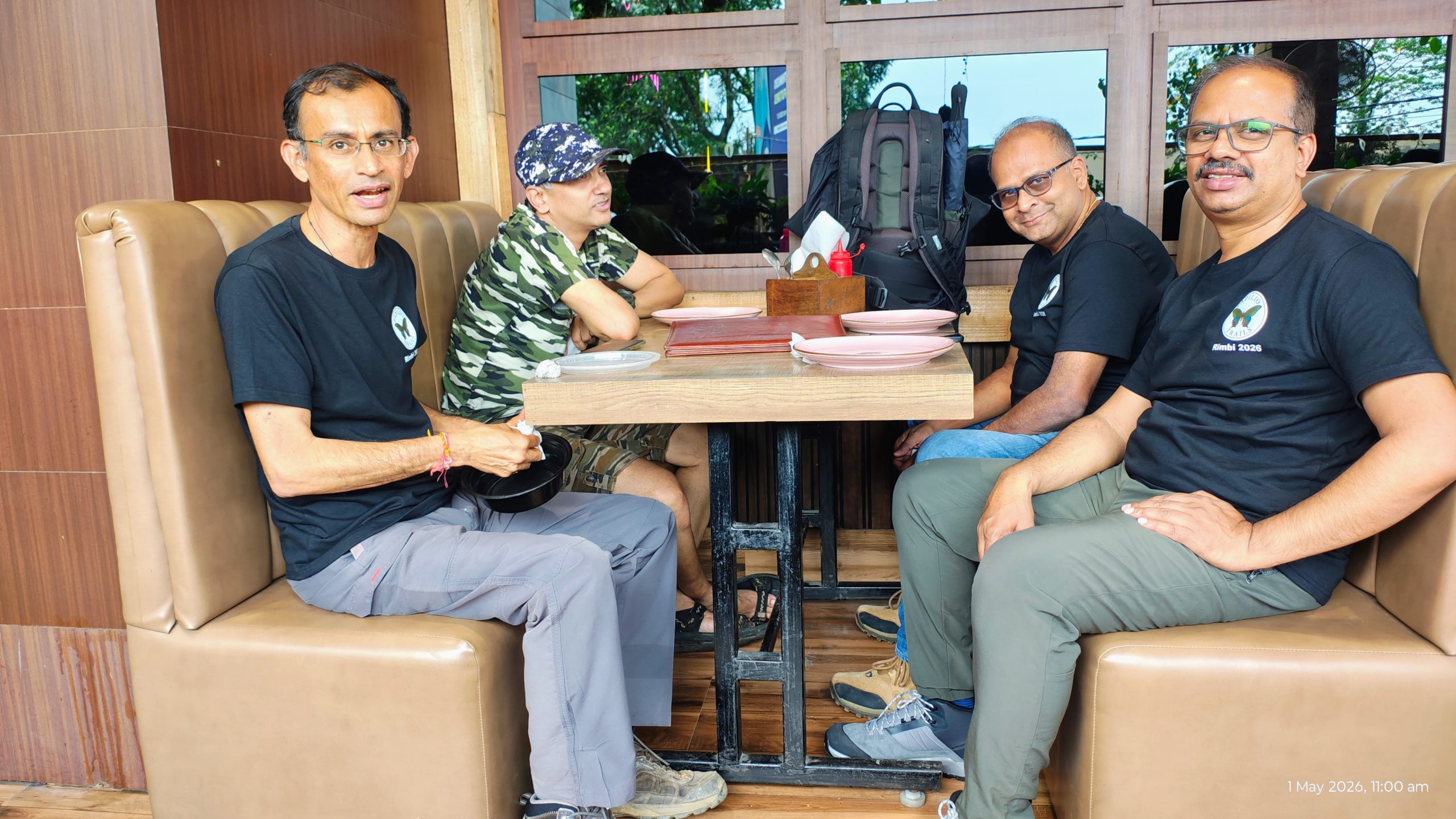
On the way, we stopped for tea at Taahi Delek Hotel, where the Great Mormon butterfly , then the leopard lacewing, seemed to be waiting for us. The hotel was crowded, and people looked at us with curiosity. A smile crossed my face as I remembered a write‑up by Firos Ak about his Makalidurga trip with Ashokda and Rohit Sir. The way Austin, Rohit Sir, and the others were clicking photos made onlookers think this group was delightfully eccentric. Thinking of that, I crossed the road and watched them—each face glowing as if it were the first time they had seen a Great Mormon, though the seniors had encountered it countless times before.
I must always say: the beauty of these small living beings is astonishing. I deeply admire those who taught me to love butterflies. A group of youngsters surrounded Ashokda, asking what we were doing. He explained about the Bangalore Butterfly Club and the peace and joy that come from observing butterflies. The clouds shifted their colors, urging us to get back into the vehicle and move on.
We followed the Teesta River, its silver ribbon winding through the valleys. The roads curved endlessly, climbing mountains and descending again, until finally we reached our destination—Rimbi. We stepped out, and I looked around: above us rose the mountains, below us flowed the river, its rhythm soothing to the soul. There, we met Sonam, who would guide us through Rimbi to discover the most exotic butterflies. After a gentle climb, we reached our homestay—Swallowtail—nestled in the embrace of West Sikkim’s beauty, where the Teesta’s song and the mountain air promised days of wonder.
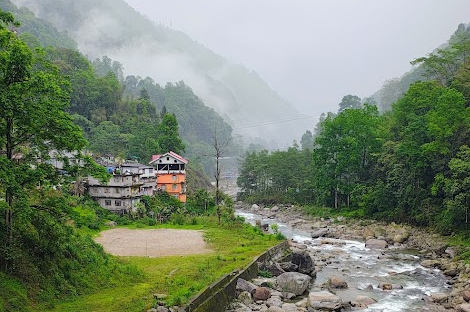
As we climbed up, I noticed the houses nearby—simple dwellings without boundary walls, surrounded by lush greenery. Though fatigue dulled my senses, the very first sight made me fall in love with the place. On the ground floor, Rajesh and the two Shekars shared a room; upstairs, Ashokda and Rohit Sir settled together, while beside them, Ajit, Austin, and I had our space.
The rooms were spacious, and ours opened onto a balcony. From there, the view was mesmerizing—mountains rising in quiet majesty, the valley stretching below, and the Teesta’s song carried faintly on the evening air. We were all exhausted, so after freshening up, we gathered for dinner and can you imagine who was waiting to welcome us, Cabbage white . Conversation was light, laughter subdued, but the promise was clear: tomorrow, by six in the morning, we would be ready for new adventures.
Sleep came quickly. I sent brief updates to my dear ones, then surrendered to rest, cradled by the mountain silence and the anticipation of butterflies waiting in the dawn.
The night was cold, perfect for deep sleep, yet—as always—I awoke at 4 a.m. The soft chorus of birds drew me to the window. For a moment, I thought I was late—the horizon was already glowing, the sun rising earlier than my mind could accept. By the time I freshened up, a gentle drizzle had begun, painting the morning in romance. With a steaming cup of coffee in hand, I stood on the balcony, sharing the quiet rain with the Dalai Lama’s cat novel,
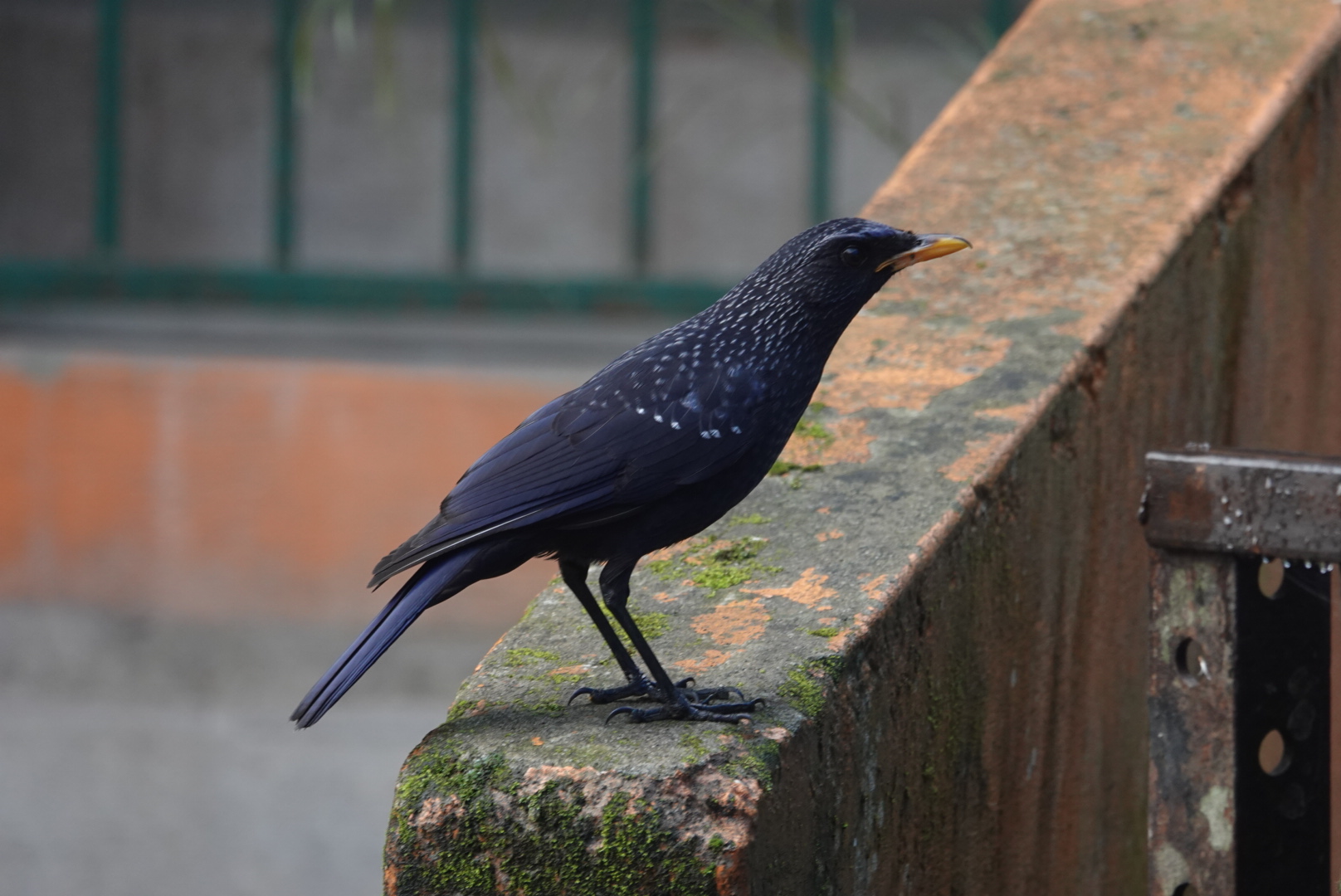
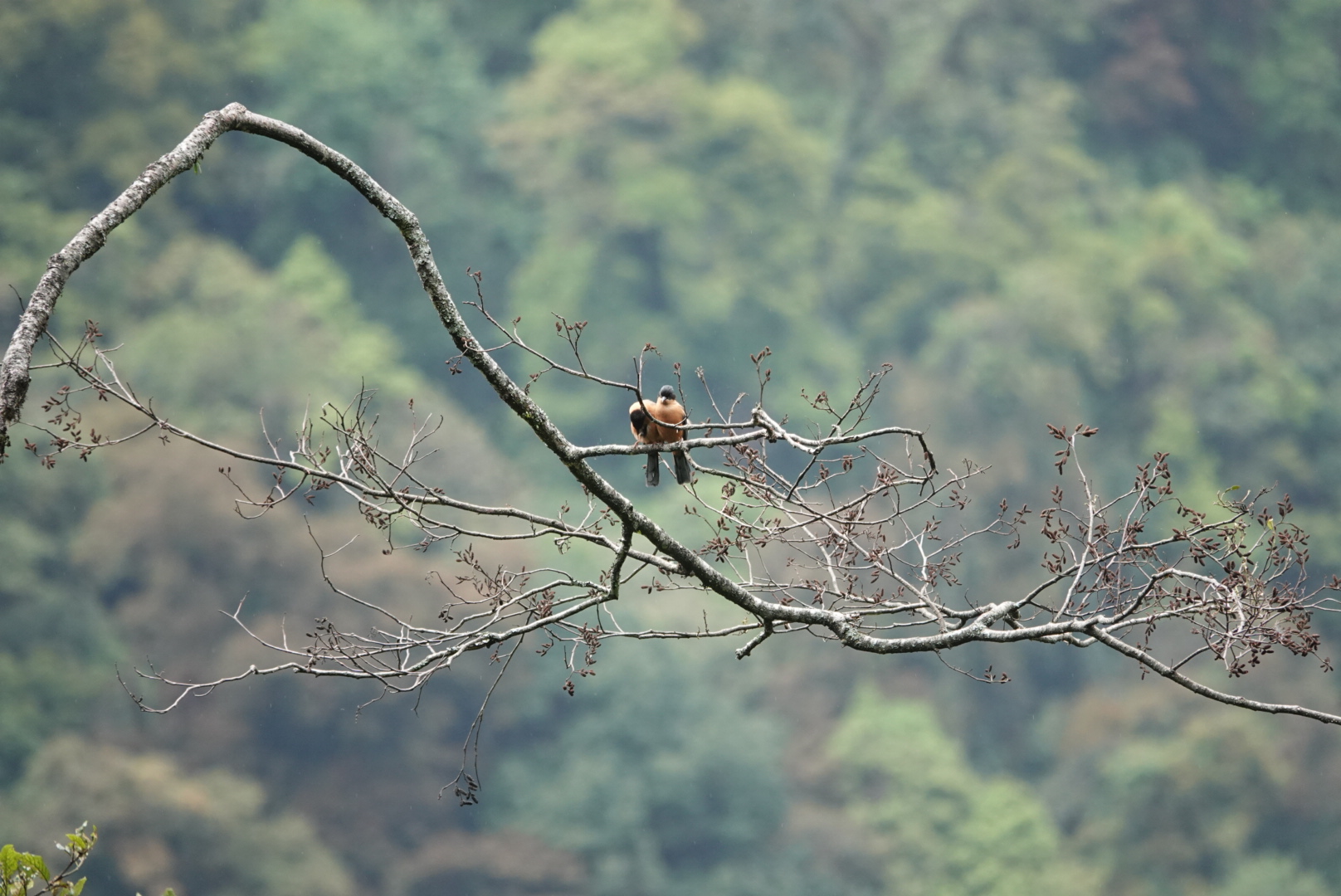
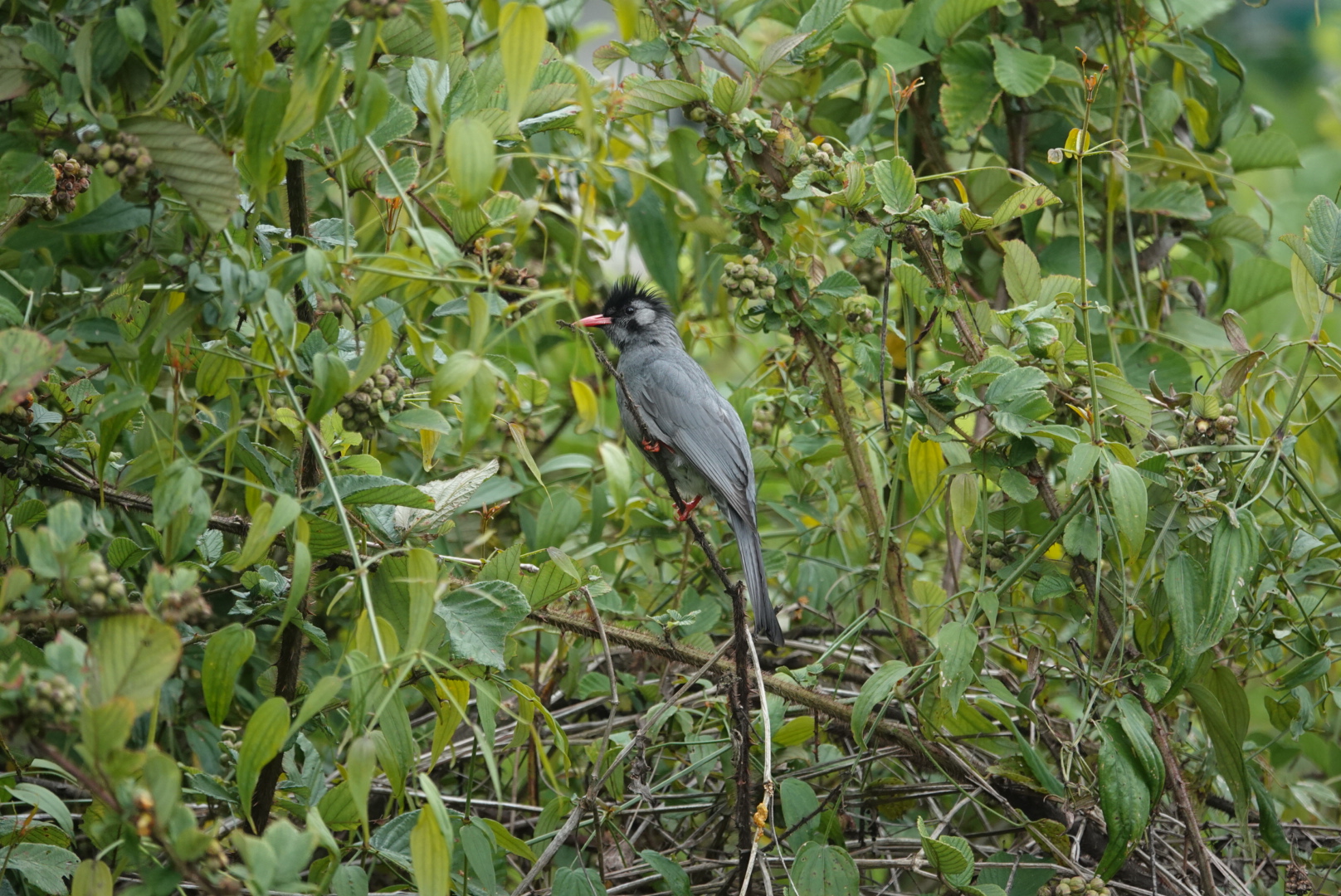
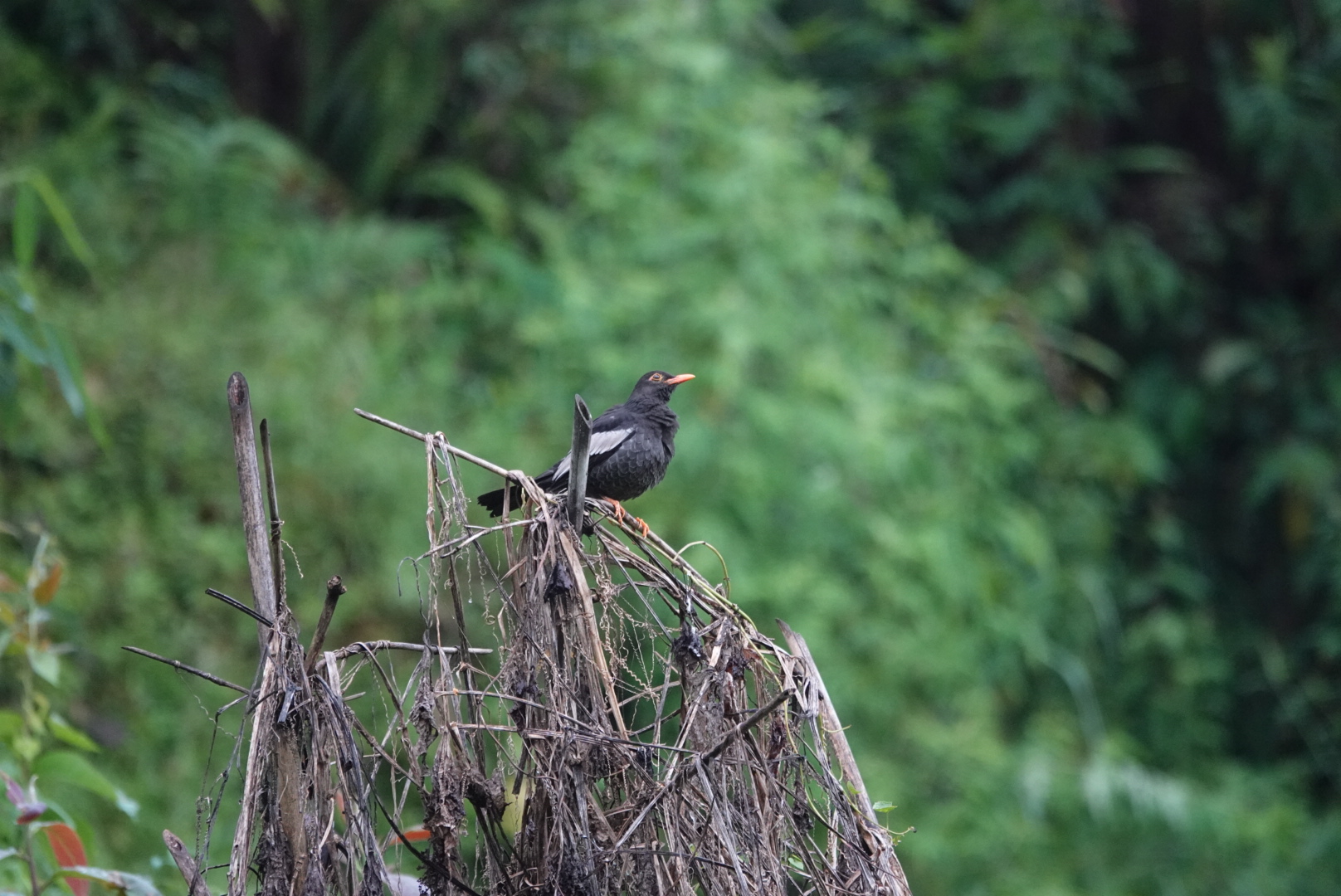
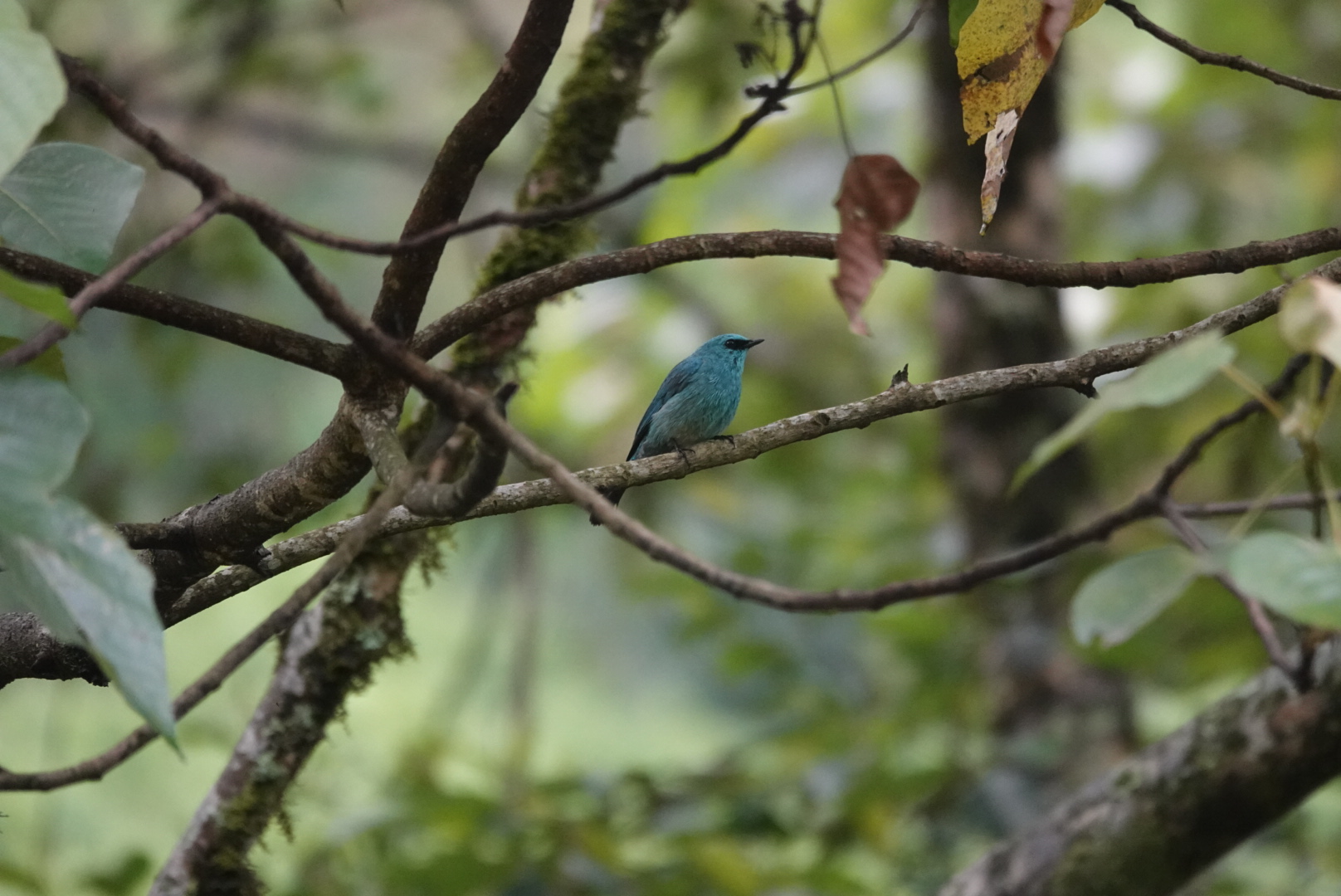
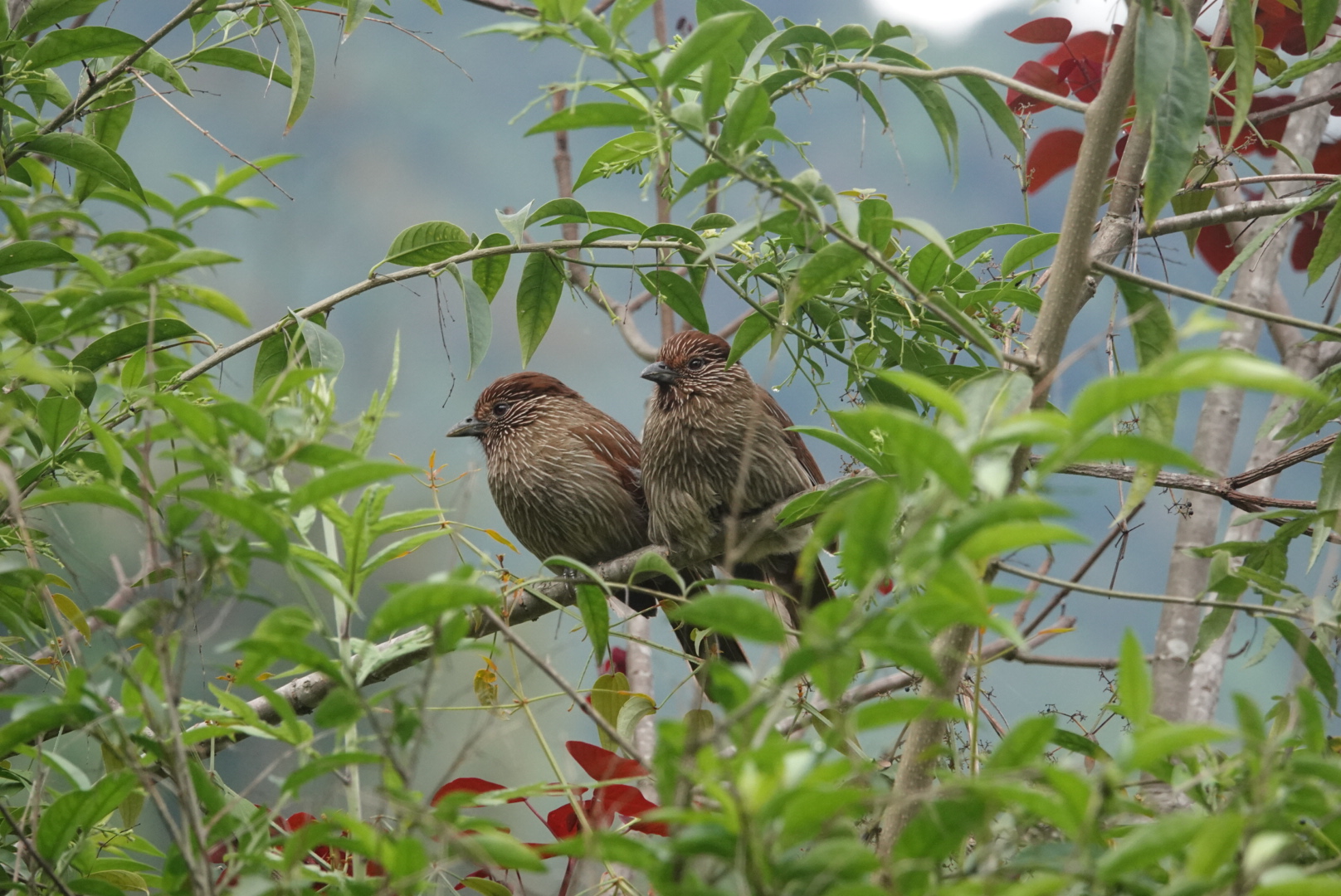
Slowly, Austin stirred and joined me, camera in hand. Our first visitor arrived on the power line—a Blue Whistling Thrush, its call echoing like a triumphant “hurray.” Excited, we wandered down toward the river for birding. What unfolded left me completely overwhelmed: Plumbeous Redstart flashing its tail, a sprangled Drongo darting through the mist, Black Bulbul, Striated Laughingthrush, Verditer Flycatcher, Grey Treepie—one after another, a cascade of winged wonders.
We crossed Yorong Falls, its waters tumbling with untamed grace, before turning back toward the homestay. On the way, we paused at a small vendor’s stall for tea and cookies, smiling at the sight of pani puri being served in this mountain nook. The drizzle continued, so we walked slowly back, letting the rain guide our pace. By the time we reached Swallowtail, breakfast was ready, and with spirits renewed, we prepared ourselves for the day’s true quest—meeting the butterflies of Rimbi, the living jewels of West Sikkim.
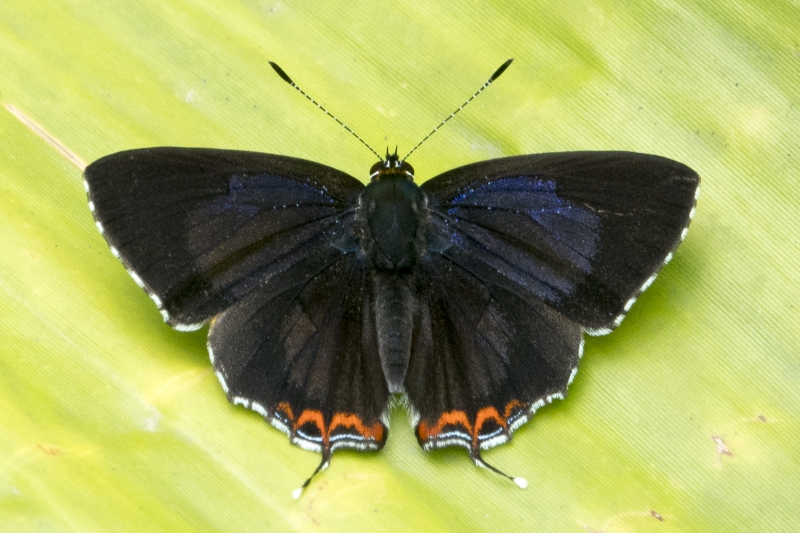
With full gear, we descended slowly, the path winding toward the river. A large butterfly fluttered nearby—at first glance, it seemed like a Common Rose, so I paid it little attention. Ashok Sir, however, was murmuring “Windmill,” and my mind, fixed on spotting that elusive species, missed the moment. Then Austin’s sharp eyes caught a smaller butterfly, larger than the Blues but dazzling in its allure. He called Rohit Sir, and he confirmed it—Purple Sapphire (Heliophorus epicles), a jewel from the Blues family. Cameras clicked, each of us taking our turn to capture its brilliance against the drizzle.
We walked on, rain misting our faces, and the people we met along the road greeted us with warm smiles, speaking as though we were old acquaintances. A little further, we crossed a stream, its icy water piercing our legs, a reminder of the mountain’s rawness. Butterflies and birds appeared in abundance, and by 1:30 we returned to Swallowtail for lunch. After a quick rest, we set out again, this time with Neyanim—the small, cheerful girl from our homestay—joining us for the walk.
By evening, around six, we were back home, drenched but exhilarated. Even in the drizzle and cold, the day had gifted us lifers: Straight-banded Treebrown, Dark Sapphire, Purple Sapphire, Spot Puffin, Mussoorie Bob, Hill Jezebel, Yellow Coaster, Bevan’s Bob, Common Peacock, Tiger Brown. And the birds—two Green Magpies flashing emerald wings in flight, Plumbeous Water Redstart, Verditer Flycatcher, Grey Treepie—all adding their notes to the day’s symphony.
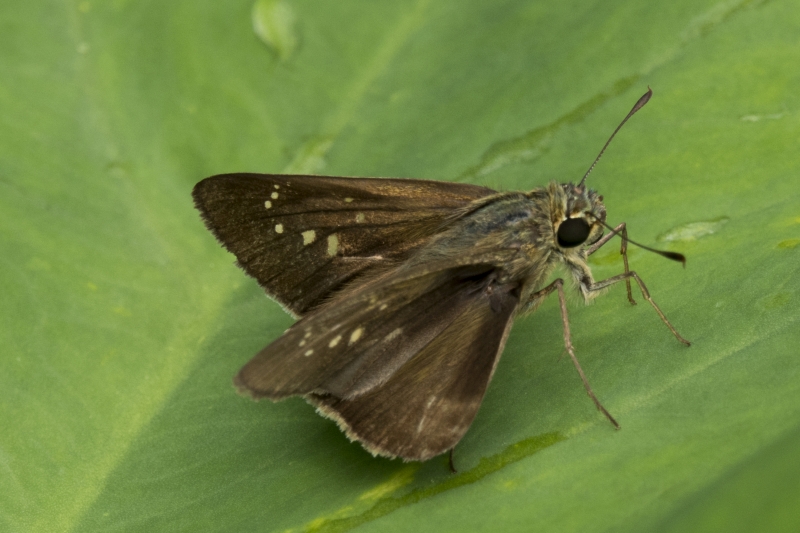
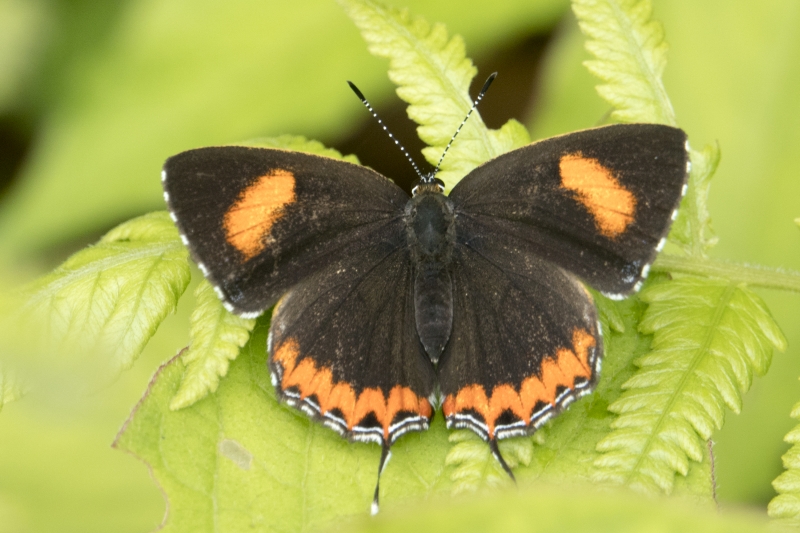
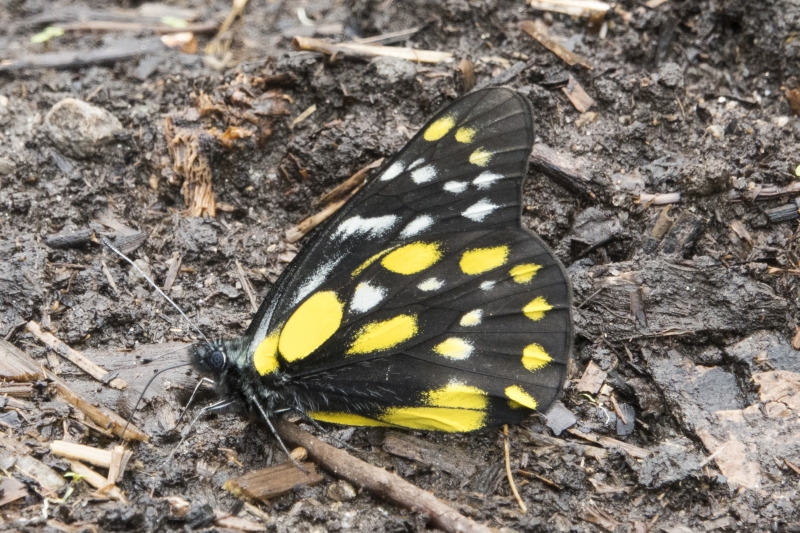
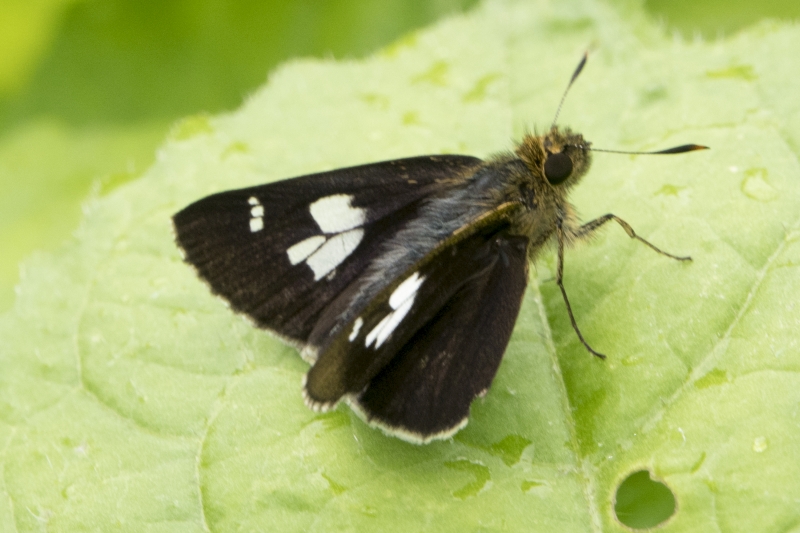
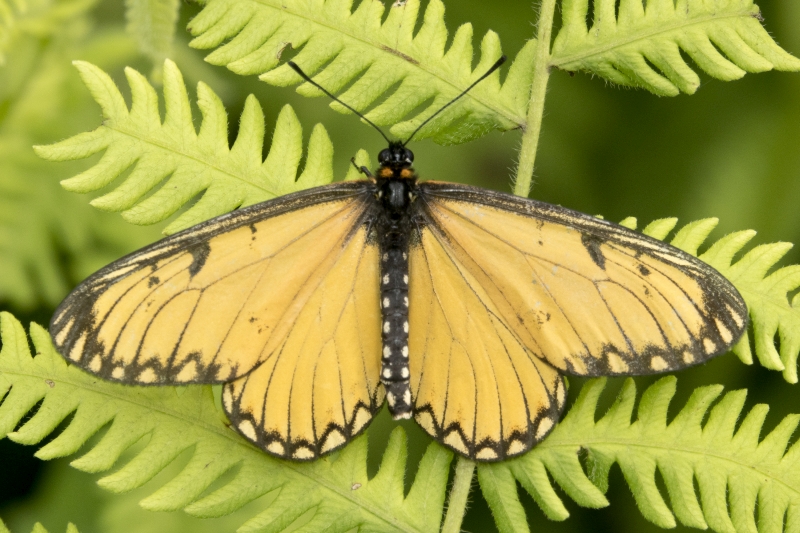
It was an unforgettable experience: the rain, the river, the companions’ laughter, and the thrill of discovering new species. Our second day in Rimbi was painted in the hues of butterflies and birds, each sighting a brushstroke on the canvas of West Sikkim’s beauty.
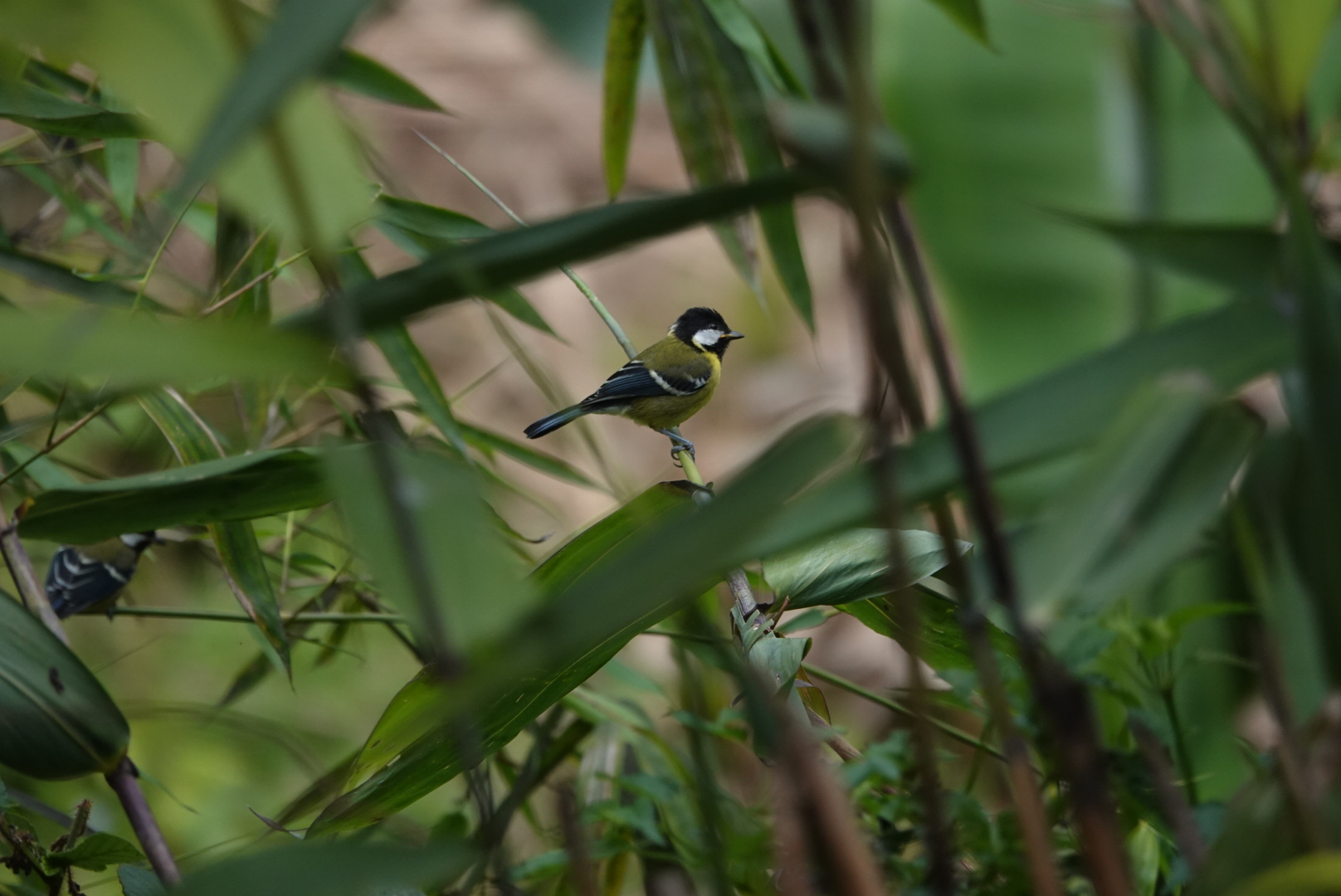
The 3rd morning broke with a gentle drizzle, the kind that softens the air and makes bird calls sound sweeter. We set out early, binoculars in hand, and the forest rewarded us with flashes of wings and song. Crossing to the opposite side, downstream, we wandered along paths that led us past quiet homes. Without hesitation or question, the families welcomed our passage, allowing us to walk freely and soak in the beauty of their surroundings.
Mahima, a bright-eyed girl in the fifth grade, joined us. She became our little guide, proudly showing her school and recounting stories of where she and her friends played, where they went for tuition, and the corners of her world that held laughter and secrets. With her, we explored those places, seeing them through her youthful lens, before returning to our familiar birding spot. There, the Common Windmill butterfly awaited us, its wings a delicate dance in the damp air.
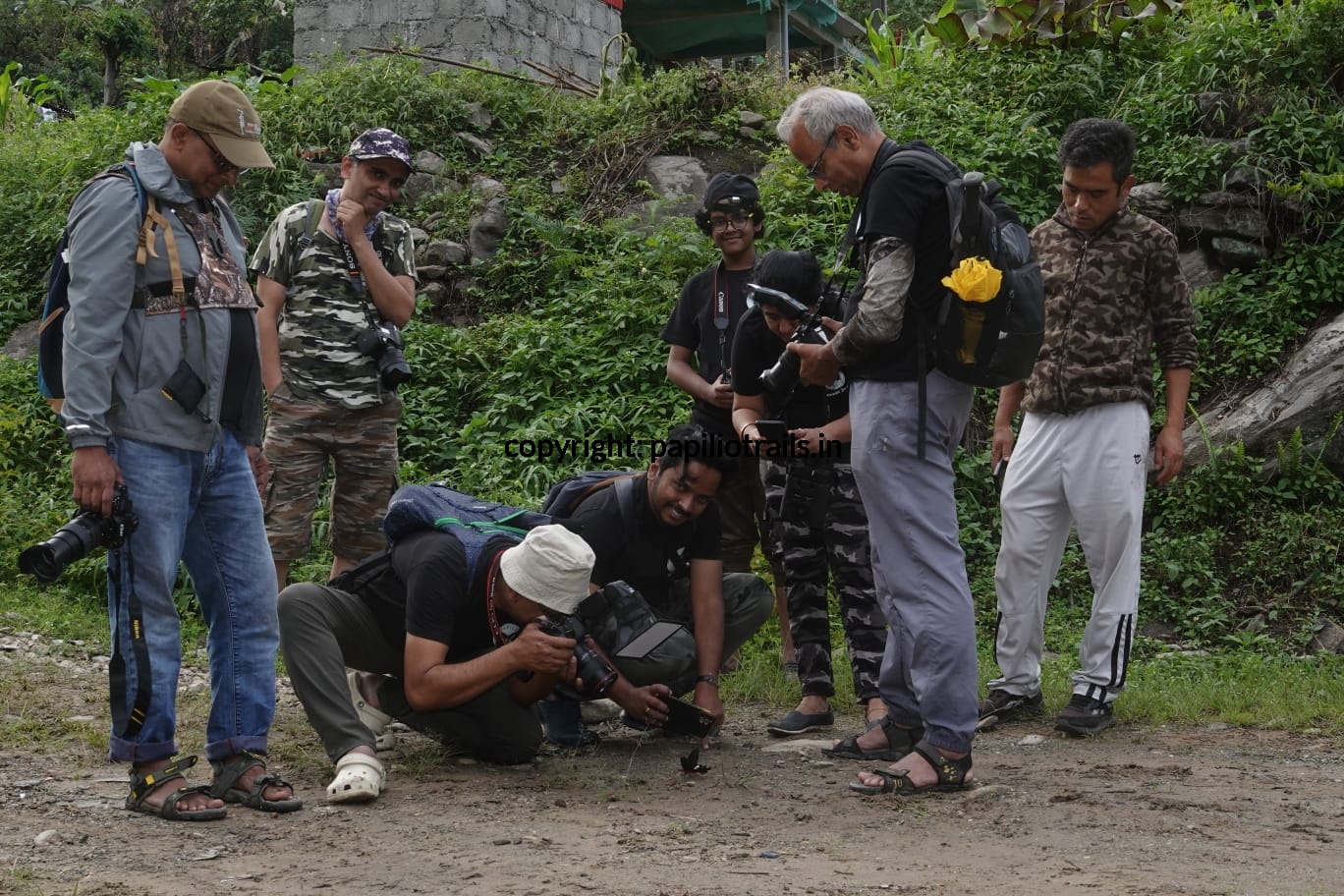
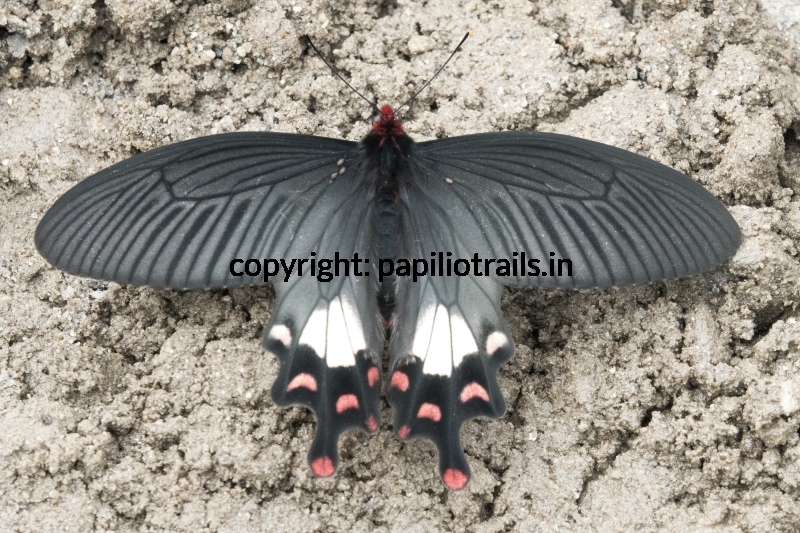
After lunch at the homestay, the sun broke through, and the day turned golden. At the riverbank and nearby plots, we were treated to a spectacle: three windmills—Rose, Great, and Common—mud-puddling at different locations, their wings shimmering like stained glass. We watched, eyes wide and full, as nature staged its quiet drama. In a potato field, a Tortoiseshell butterfly appeared, its beauty beyond words, a living jewel resting lightly on the earth.



As evening settled, we gathered again, listening to Ashok da outline the plan for the next day. The warmth of tradition filled the room as bowls of Thukpa were served—a hearty Tibetan and Nepalese noodle soup, rich and comforting. Here in Rimbi, the language of the land is Nepalese, and the food, the people, and the river together wove a tapestry of belonging.
The day closed with gratitude, our hearts full from the expedition, our senses steeped in the sights and sounds of Rimbi. Tomorrow promised more, but tonight, the memory of butterflies and the taste of Thukpa lingered like poetry. Into the Heart of Khangchendzonga
The fourth morning dawned with a light drizzle, as though the skies themselves were eager to bless our journey. Excitement pulsed through us—we were bound for Khangchendzonga National Park, a UNESCO World Heritage Site and one of the most pristine wildernesses of the Himalayas. Our road captain, Ashok Rai, a cheerful soul with friends scattered along the way, greeted each familiar face as we drove through winding roads. His warmth seemed to mirror the hospitality of Sikkim itself.
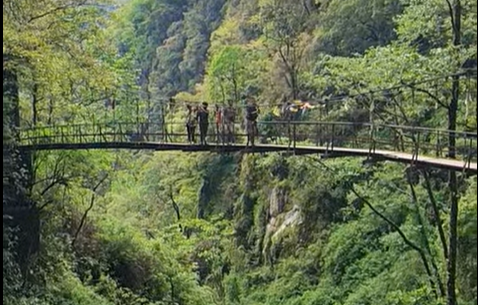
The trek began at Yuksom, the historic gateway to KNP. Rohit Sir led the way, followed by Ashokda, Austin, Ajit, myself, and the rest of our companions—Sonam, Rajesh, and both Shekhars—forming a lively caravan of explorers. Each step was a revelation: moss-draped trees, orchids clinging to branches, and the mist weaving silver veils across the forest. Whenever fatigue crept in, a small waterfall would appear, its crystal spray cooling our faces, reminding us that nature always provides solace.
The scenery was nothing short of cinematic—verdant valleys, towering ridges, and the hush of ancient forests. It felt as though we had stepped into a living documentary, the kind one watches on television but never imagines inhabiting. Yet here we were, breathing it in, touching it, becoming part of it.
We reached the hanging bridge, suspended like a thread between two worlds. Monkeys awaited us there, curious and playful, their antics adding laughter to the stillness. We sat for a while, absorbing the surroundings—the river rushing below, the forest whispering around us, the Himalayas standing guard in the distance.
On our way back, the trail transformed into a bird paradise. Warblers, flycatchers, and thrushes revealed themselves in flashes of color and song. Though butterflies eluded us that day, the avian chorus more than compensated, filling the forest with music.
We stopped for food along the way, simple yet nourishing, and closed the day with hearts full of wonder. The absence of butterflies was not a loss—it was nature’s way of reminding us that every day holds a different gift.
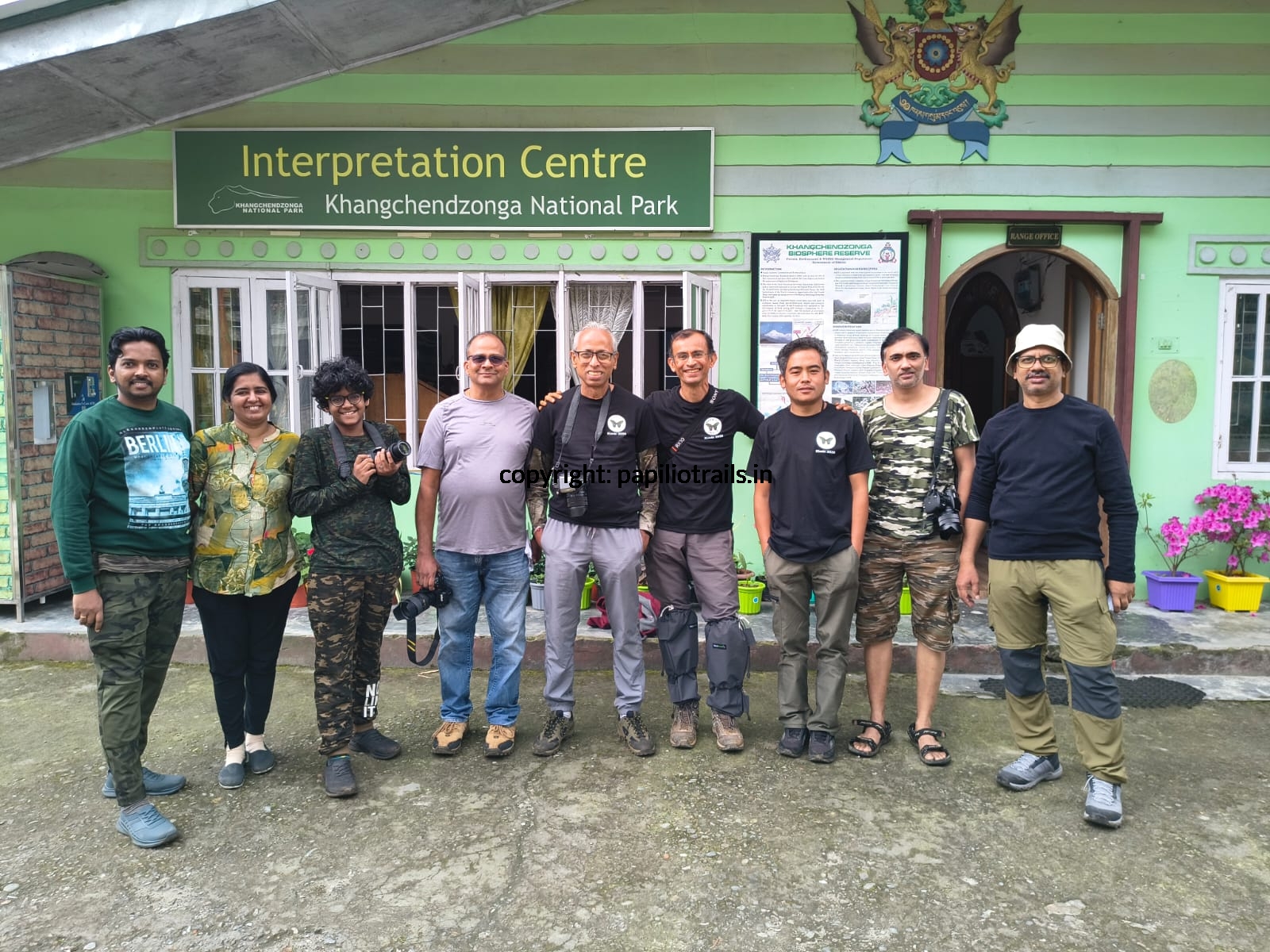
Khangchendzonga National Park is Nestled in the lap of the Himalayas, KNP is a sanctuary of biodiversity and myth. Spread across glaciers, valleys, and forests, it is home to snow leopards, red pandas, Himalayan black bears, and countless bird species. The park is not only a natural treasure but also a cultural one—its landscapes are woven into the sacred stories of the Lepcha people, who believe the mighty Khangchendzonga peak is a guardian deity.
Walking through its trails is more than trekking; it is a pilgrimage into the heart of nature, where every waterfall, every birdcall, and every stone bridge whispers of timeless harmony between land and spirit.
Darap Village – Where Butterflies and Birds Meet
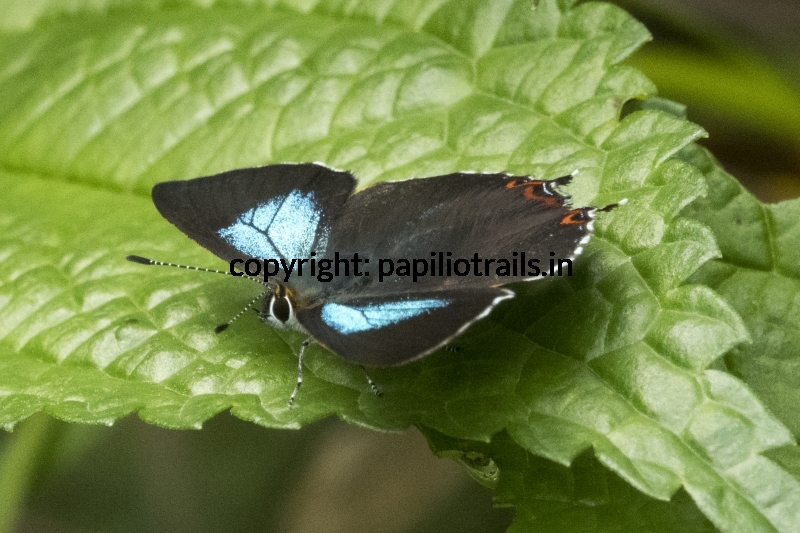
The morning carried a soft drizzle, a familiar rhythm by now, as we set out for Darap village. Along the way, nature had prepared a surprise: a butterfly spot where the elusive Dusky Labyrinth awaited us. At first, it teased us—fluttering up before anyone could capture its image. Faces grew a little dull with disappointment, but then the Powdery Green Sapphire appeared, its emerald shimmer lighting up smiles once more. And as if sensing our joy, the Dusky returned, this time posing gracefully, allowing every camera to frame its beauty.

We moved on to the next spot, where butterflies gave way to birds. The forest canopy came alive with their chorus—Grey-headed Canary Flycatchers darting like sparks of yellow, Verditer Flycatchers glowing turquoise against the mist, and Rufous Sibias flashing chestnut wings as they called from the treetops. A pair of Blue Whistling Thrushes added their deep, resonant notes, while White-throated Laughingthrushes tumbled through the undergrowth in noisy flocks. It was a bird paradise, each species adding its own brushstroke to the living canvas of Darap.
But nature always has one more surprise. On a sun-warmed rock, we spotted a Japalura lizard, basking in regal stillness. Its scaled body gleamed in the drizzle-softened light, a reminder that beauty in the wild is not confined to wings alone.
Instead of returning directly to the homestay, we were drawn once again to the Windmill spot. The drizzle persisted, and at first, no butterflies greeted us. Then Sonam, exploring the far side of the river, called out—something extraordinary awaited. We hurried across, and there it was: a Forester butterfly, dark and dignified, resting as though it had been waiting just for us.
The day closed with smiles all around. From the playful Dusky Labyrinth to the sapphire’s glow, from the chorus of birds to the quiet majesty of the Forester, Darap had given us a day steeped in wonder.
The Final Day in Rimbi – Khechuperi Lake and Austin’s Birthday
Our sixth and last day in Rimbi began with heavier drizzle, the kind that blurs the hillsides into watercolor shades of green. The destination was Khechuperi Lake, a sacred mirror of the sky, revered by locals as a wish-fulfilling lake. The path promised bird paradise, but the rain silenced the chorus, leaving us instead with the quiet company of leeches. They clung to us with persistence, and even Austin—celebrating his birthday—was not spared. With a laugh, he declared it his “birthday treat to the leeches,” turning discomfort into delight.
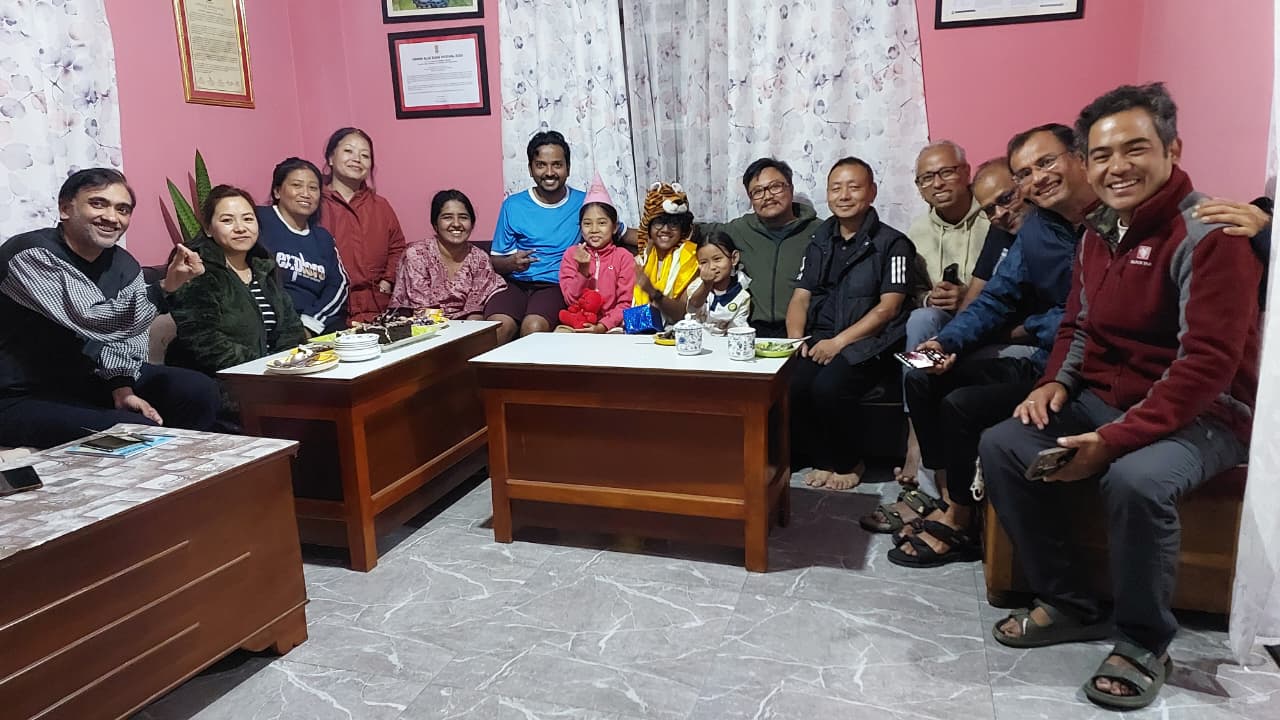
We returned empty-handed in terms of sightings, but the day held a surprise far greater than any bird or butterfly. A birthday party awaited Austin, warm and homely, filled with laughter, children’s chatter, and the aroma of local cooking. The bonds formed with the village kids—Neyanim, Mahima, and Austin himself—made the celebration feel like family. Their mothers, Pinkyla and Nilu Tamang, had become close friends, and Nilu deedi’s cooking added flavor to the memory. That evening, Rimbi felt less like a destination and more like home.
The Journey Back – Butterflies as Farewell Gifts
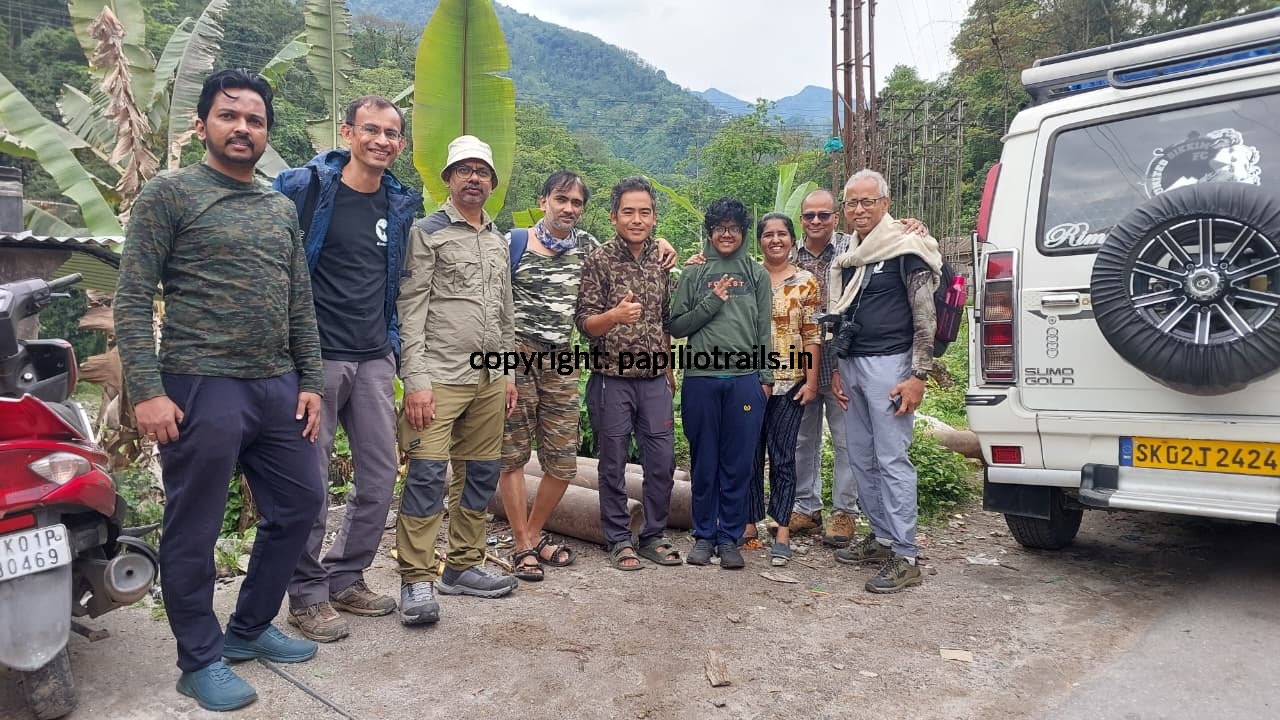
The next morning, the sun finally broke through, bright and clear, though our hearts were heavy. The children were subdued, their faces shadowed with the sadness of parting. We boarded Pemba’s vehicle once more, winding through the familiar twists and turns of Sikkim’s roads. This time, the enthusiasm of discovery had softened into the sweetness of memory.
Nature, however, had one last gift for us. At a butterfly spot near a stream, the sunlight unveiled a dazzling farewell:
The streamside clearing became a farewell stage, and nature offered its gifts in dazzling succession. The Mapwing spread its patterned wings like a cartographer’s dream, tracing invisible maps upon the air. The Nawab, Rohit Sir’s familiar guest back in Bangalore, greeted us here in the wild with regal poise. A sudden glimmer revealed the Sunbeam, glowing like a shard of light fallen from the sky. Nearby, the Forest Pierrot fluttered delicately, understated yet enchanting in its simplicity. And then, with a flourish, the Orange Oakleaf unveiled its fiery brilliance, a master of disguise transforming into a blaze of color. Together, they turned the sunlit stream into a celebration, a final chorus of wings before our journey’s close.
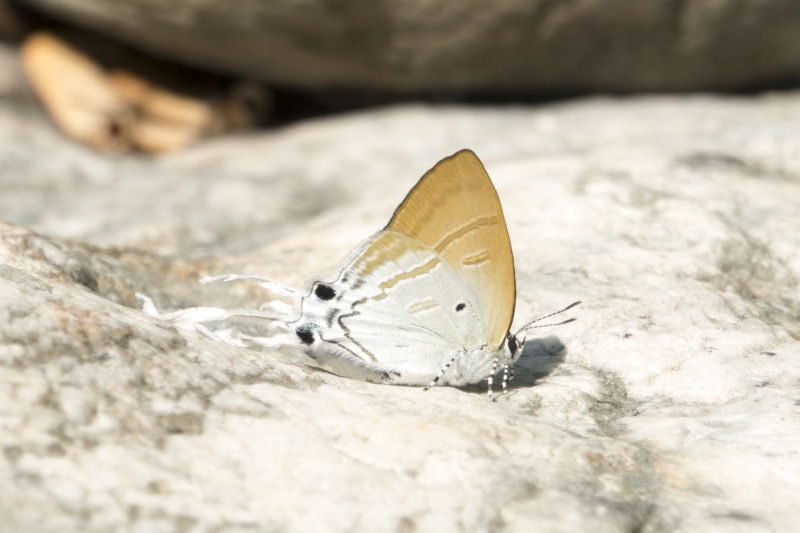
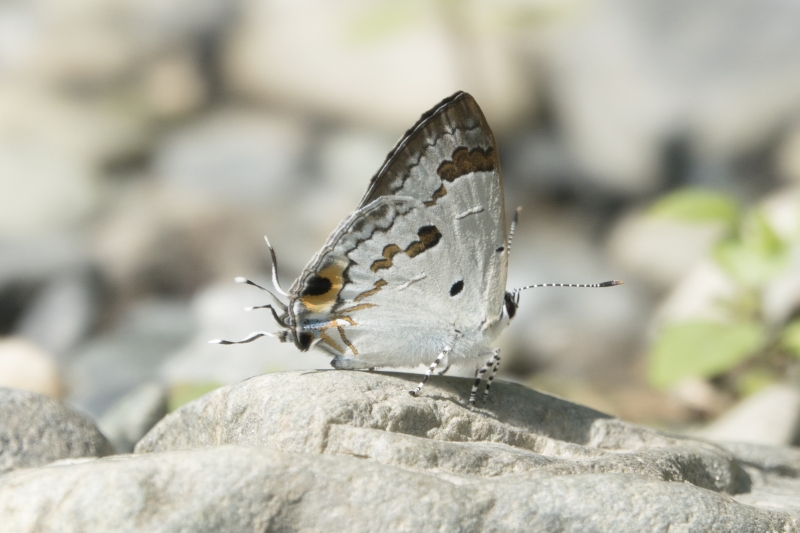
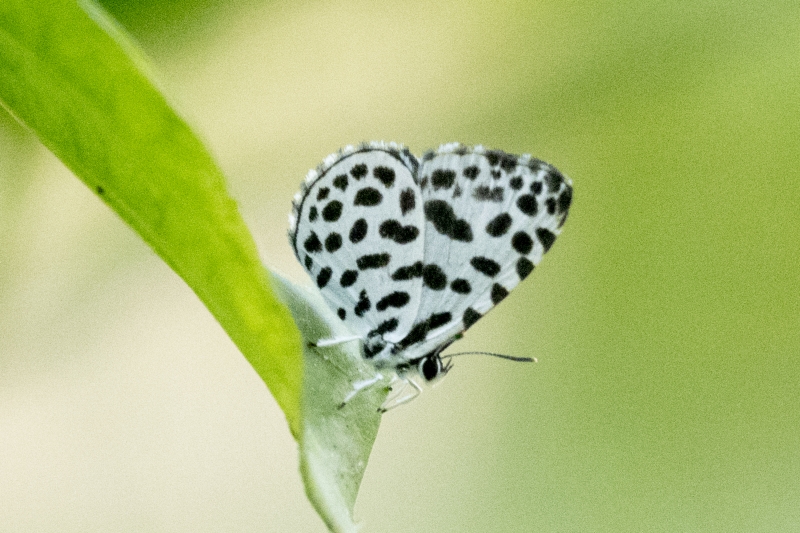

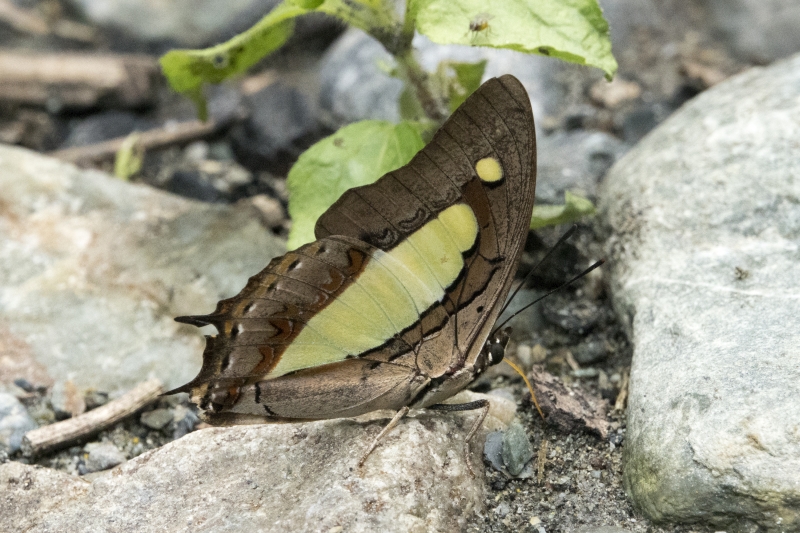
It was as though the forest itself had thrown a parting party, a final celebration before thunder rolled in and urged us onward.
We stopped briefly at our old familiar spot, then continued to the hotel. Rest came easily, sleep wrapping us in the comfort of shared adventure. The next day, a tuk-tuk carried us to the airport, then the flight bore each of us back to our own homes.
The trip had ended, but Rimbi lingered. The drizzle, the windmills, the laughter of children, the taste of Thukpa, the hush of Khangchendzonga’s forests, and the shimmer of butterflies—all became part of us. Journeys end, but memories do not. Rimbi had given us more than sights; it had given us belonging, a reminder that nature and people together create the most enduring stories.
- Ms Shiny Ajith